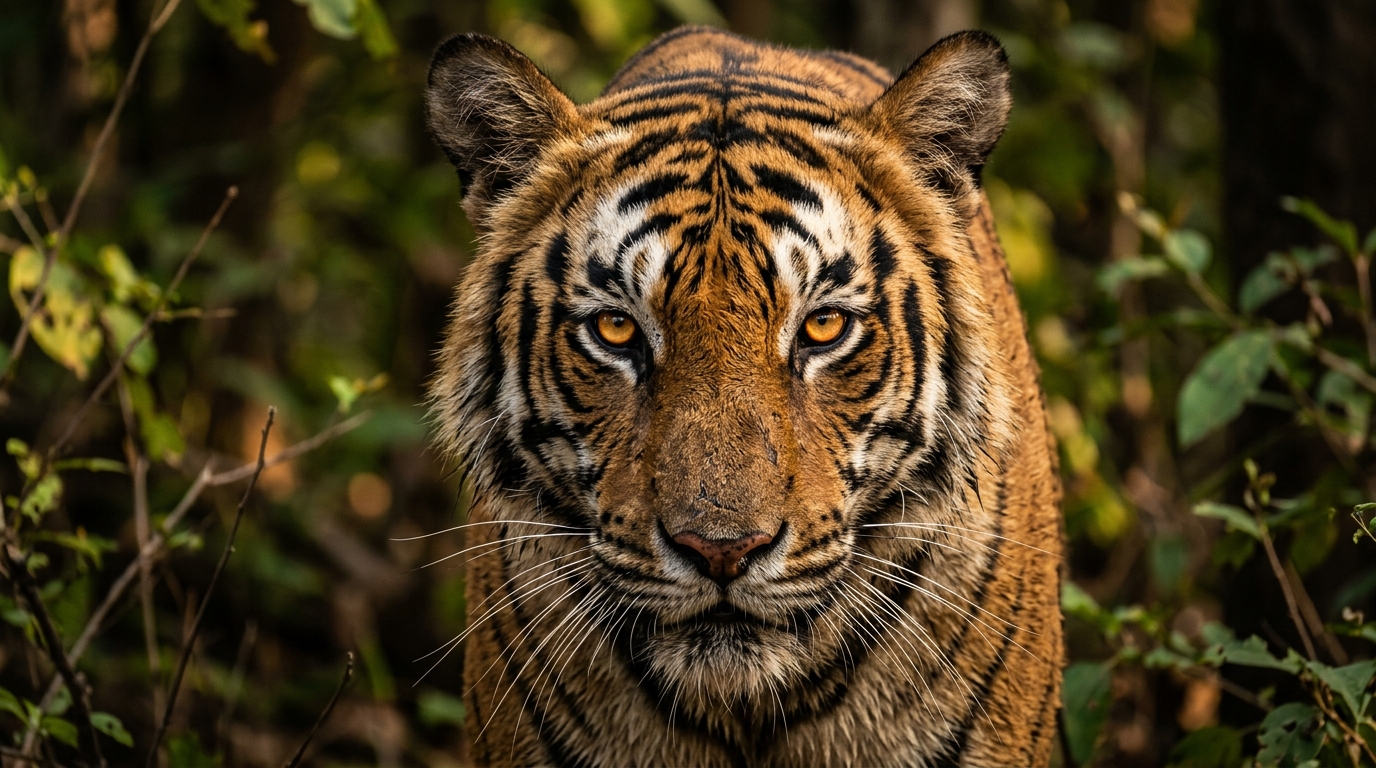
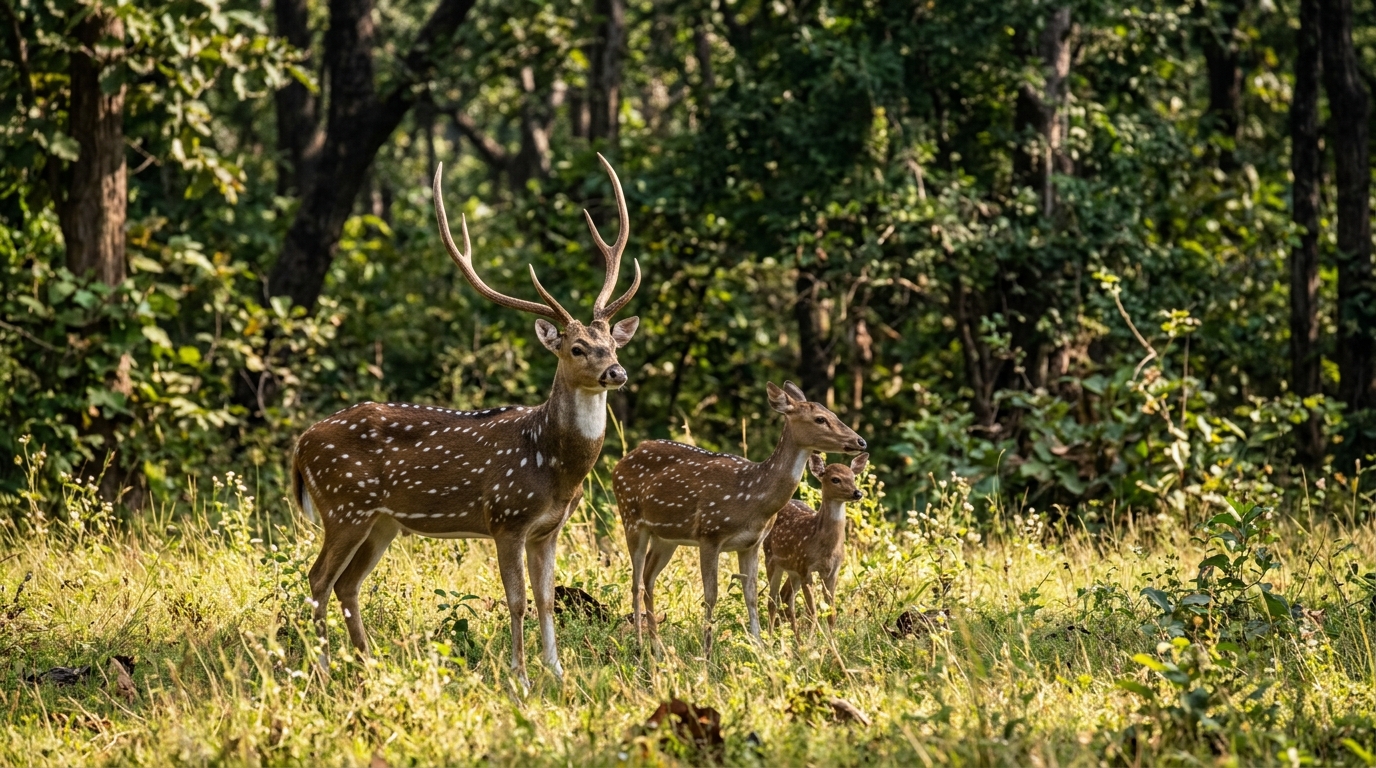
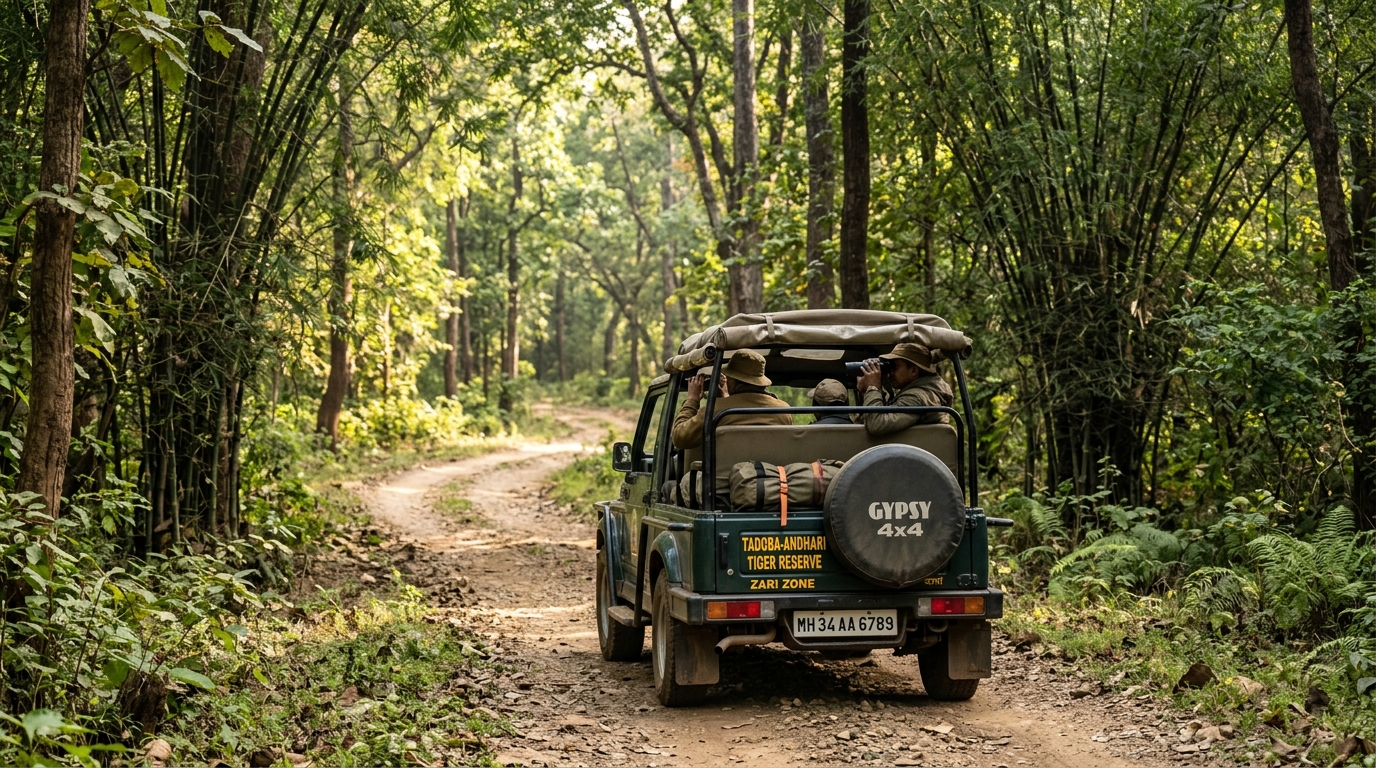
The botanical landscape of Tadoba Andhari Tiger Reserve represents a classic Southern Tropical Dry Deciduous Forest ecosystem. Dominated by dense teak trees and thick bamboo brakes, the forest canopy creates a thriving habitat supporting one of the highest herbivore and carnivore populations in Central India.
Dominant Tree Species in Tadoba
Tadoba harbors over 150 species of trees and woody shrubs, with the following species playing pivotal ecological roles:
- Teak (Tectona grandis): The most predominant timber species covering nearly 40% of the forest canopy. Its broad leaves provide summer shade for tigers and leopards.
- Bamboo (Dendrocalamus strictus): Locally called Velu, lush bamboo thickets dominate the understory across Kolara and Moharli, creating impenetrable cover where tigers rear cubs and gaur herds feed.
- Ain or Crocodile Bark Tree (Terminalia tomentosa): Instantly recognized by its rough bark resembling reptile hide; storehouses of water utilized by jungle animals during peak droughts.
- Mahua (Madhuca longifolia): A sacred tree in tribal culture, producing fleshy cream-colored flowers in March that attract sloth bears, deer, and langurs.
- Bija or Indian Kino (Pterocarpus marsupium): Highly valued for its medicinal red gum resin, known to regulate blood sugar.
- Palas or Flame of the Forest (Butea monosperma): In spring (Feb – March), vibrant scarlet blossoms set the dry forest hills on fire with brilliant color.
- Semal or Silk Cotton Tree (Bombax ceiba): Huge buttressed trees producing enormous red flowers that draw dozens of bird and butterfly species.
- Dhaora (Anogeissus latifolia): Sturdy hillside trees whose leaves change to a distinctive copper-red in early winter.
Medicinal Plants & Aquatic Flora
The forest floor is carpeted with indigenous medicinal herbs including Kach Kuri (Mucuna pruriens), Bheria, and wild turmeric. Around water bodies such as Tadoba Lake, Telia Dam, and Kolsa Lake, flourishing aquatic plants like water lilies, lotus, and marsh reeds offer crucial nesting grounds for resident jacanas, storks, and kingfishers.